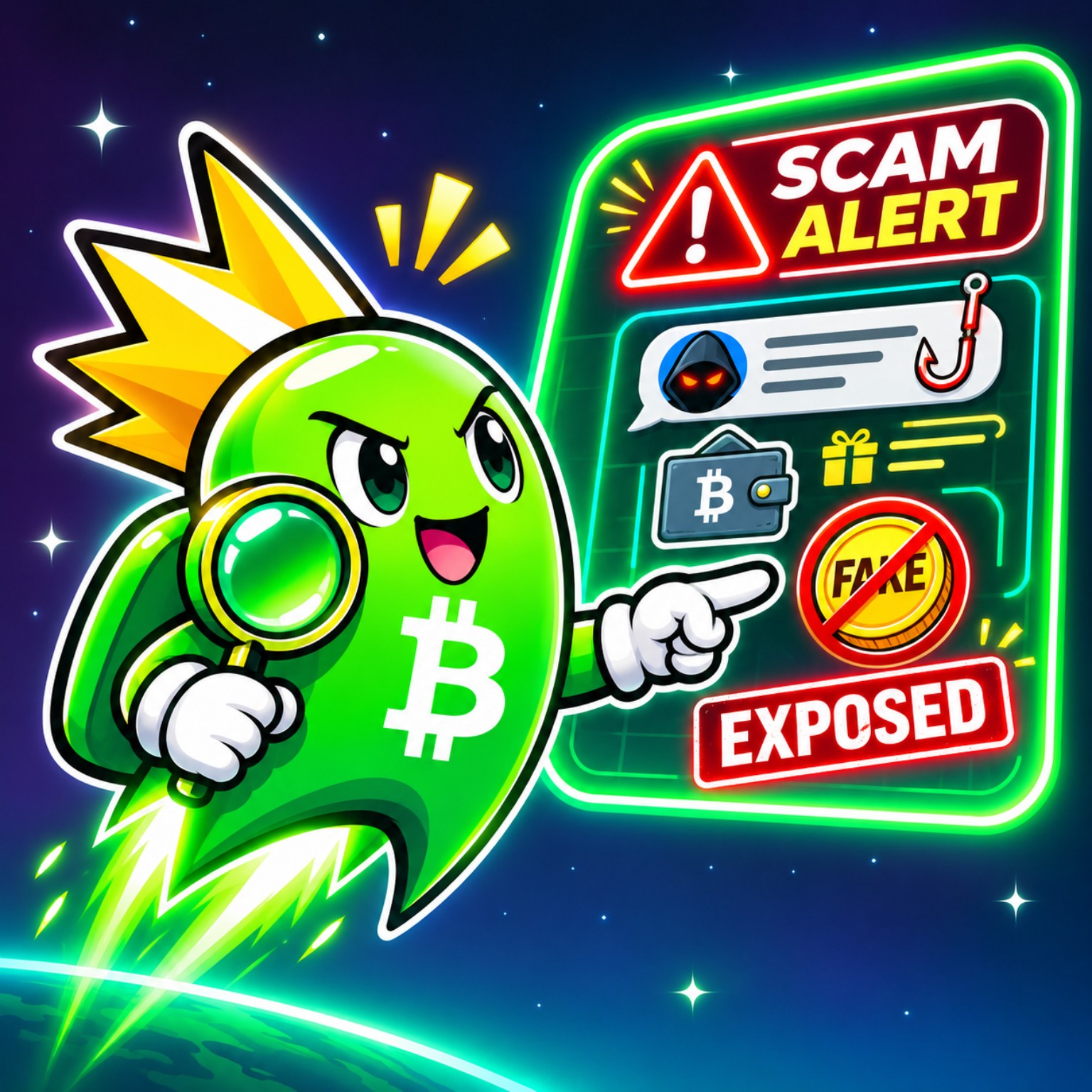
SCAM WATCH • CASE FILE 001 • 18 NOVEMBER 2026
A stranger promises a $60,000 cryptocurrency prize. The recipient is told to claim it within 48 hours, is directed into a wallet showing 1,000 USDT, and is then asked for $350. This is the kind of trap Bitcoin Jason Scam Watch was created to expose.
THE WARNING IN ONE SENTENCE
Never pay a fee to unlock an unexpected crypto prize, and never deposit money into a wallet a stranger has set up for you.
A person known to Bitcoin Jason recently sought help after receiving unsolicited messages from someone claiming to represent Coinbase. We reviewed screenshots of the conversation and the wallet display. We are withholding the recipient’s identity and personal details to protect their privacy.
How the alleged giveaway unfolded
- The hook: A contact claiming to represent Coinbase announced the recipient had been selected for a $60,000 giveaway.
- The story: The contact claimed Coinbase and the Signal messaging app were running a joint promotion. We found no verified evidence supporting that claim.
- The countdown: The recipient was told there were only 48 hours to claim the reward.
- The move: The contact instructed the recipient to download Signal and subsequently arranged the setup of a Crypto.com Onchain wallet.
- The convincing screen: The wallet showed 1,000 USDT and an approximate displayed value of $996.
- The demand: The person behind the supposed prize demanded $350 from the recipient.
Important: We have not established that the $350 was paid. Nor have we independently confirmed the source, ownership, or authenticity of the displayed USDT. The suspicious communication and fee demand are enough to identify a serious scam attempt without inventing those missing facts.
Why the $350 demand is the giveaway
A genuine prize does not require you to send money to a stranger to “activate”, “verify”, or “release” it. This is the classic pattern of an advance-fee scam: promise a benefit, make it seem close enough to touch, then demand payment upfront. Additional fees may follow.
If someone really wants to give you $60,000, why must you pay them $350 first?
Australia’s Scamwatch guidance on unexpected-money scams specifically identifies requests for upfront fees or taxes to claim a prize as a warning sign. Coinbase’s own giveaway guidance says Coinbase will not require people to send cryptocurrency to receive cryptocurrency back.
Can a fake USDT token exist on Solana?
Yes. Solana allows people to create tokens and attach human-readable information such as names, symbols, and logos. A token may call itself “USDT” and resemble Tether without being genuine Tether. The critical identifier is the token’s mint address, not its logo, name, or ticker. Solana’s official token-verification guide warns about duplicate and impersonating tokens.
But there is a technical distinction worth getting right: creating 1,000 counterfeit tokens does not automatically make a reputable wallet price them at $1 each. Wallet interfaces may display valuations using pricing feeds, token metadata or supported-token mappings. A displayed dollar amount must be understood in context.
That means the 1,000 USDT shown in this particular case could be a counterfeit token, could be genuine USDT in an unsafe wallet, or could involve another misleading presentation. We cannot conclusively identify which without independently checking its token mint and transaction history.
For reference, Tether publishes the official Solana USDT mint address. Compare token identity against Tether’s official listing, not against addresses provided in a stranger’s message. Do not follow suspicious “verification” links or connect your wallet to them.
The bigger issue: who controls the wallet?
According to the account provided to us, the scammers were involved in creating the wallet. That raises an immediate security question: who generated or knows the recovery phrase?
If someone else knows a wallet’s recovery phrase, they may be able to restore it on another device and spend any genuine assets in it. Crypto.com explains that anyone who knows the recovery phrase can access and spend the wallet’s funds.
It is important not to blame the legitimate applications. Coinbase is a real cryptocurrency company, Signal is a real messaging app, and Crypto.com Onchain is a real wallet product. A scammer can misuse their names, communications tools and software. There is no evidence here that these companies sponsored the alleged giveaway.
Seven red flags to recognise
- You are told you have won a large prize you never knowingly entered.
- A supposed company representative contacts you through an unexpected private message.
- You are pressured by a deadline, such as “claim within 48 hours”.
- You are told to move the conversation to a different messaging app.
- You are asked to install, import, or use a wallet arranged by the stranger.
- You are shown a token or dollar balance but cannot independently establish its legitimacy.
- You are told to pay a fee, tax, deposit, or “gas” amount to release the reward.
What to do if this is happening to you
- Stop: Do not pay the requested fee. Do not send BTC, BCH, SOL, USDT or bank transfers. Do not sign transactions or connect a wallet to websites supplied by the stranger.
- Secure: Treat a stranger-created wallet as untrusted. Never use a recovery phrase they supplied. If your real holdings or accounts are at risk, seek trusted, independent support to secure them.
- Keep evidence: Save messages, account usernames, URLs, wallet addresses and transaction IDs. Do not publish victims’ private details.
- Contact your provider: If you already sent money, immediately contact your bank, card provider, or the cryptocurrency exchange used to make the payment. Explain that you suspect fraud and ask about any possible recovery options.
- Report: Submit a report to Scamwatch. If there has been financial loss or theft, consider ReportCyber and police. For possible identity misuse, IDCARE offers free assistance.
- Beware the second scam: Fraudsters sometimes return as supposed recovery agents promising to retrieve lost cryptocurrency for another upfront fee.
For official Australian next steps, see ASIC Moneysmart: What to do if you’ve been scammed.
The Bitcoin Jason message: education without embarrassment
The person targeted in this case did the right thing by reaching out for help. People can be manipulated when a credible brand name, urgency, and an apparently real wallet balance are combined. Anyone can be targeted, regardless of age or experience.
If a friend brings you a suspicious cryptocurrency message, do not ridicule them. Help them slow down, verify independently, and protect their money. Responsible cryptocurrency adoption must include education, consumer protection and safe self-custody.
THE GOLDEN RULE
No prize is worth giving someone else the keys to your wallet. Verify first. Never rush because a stranger has started a countdown.
About Bitcoin Jason Scam Watch
Bitcoin Jason Scam Watch is a recurring educational series covering real-world scams, fake giveaway offers, suspicious wallet setups, token impersonation, recovery fraud and practical self-custody safety. Browse future investigations in the Scam Watch archive.
Case status (18 November 2026): The fraudulent prize claim and $350 demand have been reported to us; token authenticity, recovery-phrase custody and whether any payment was made remain unverified. We will distinguish confirmed facts from informed possibilities in any updates.